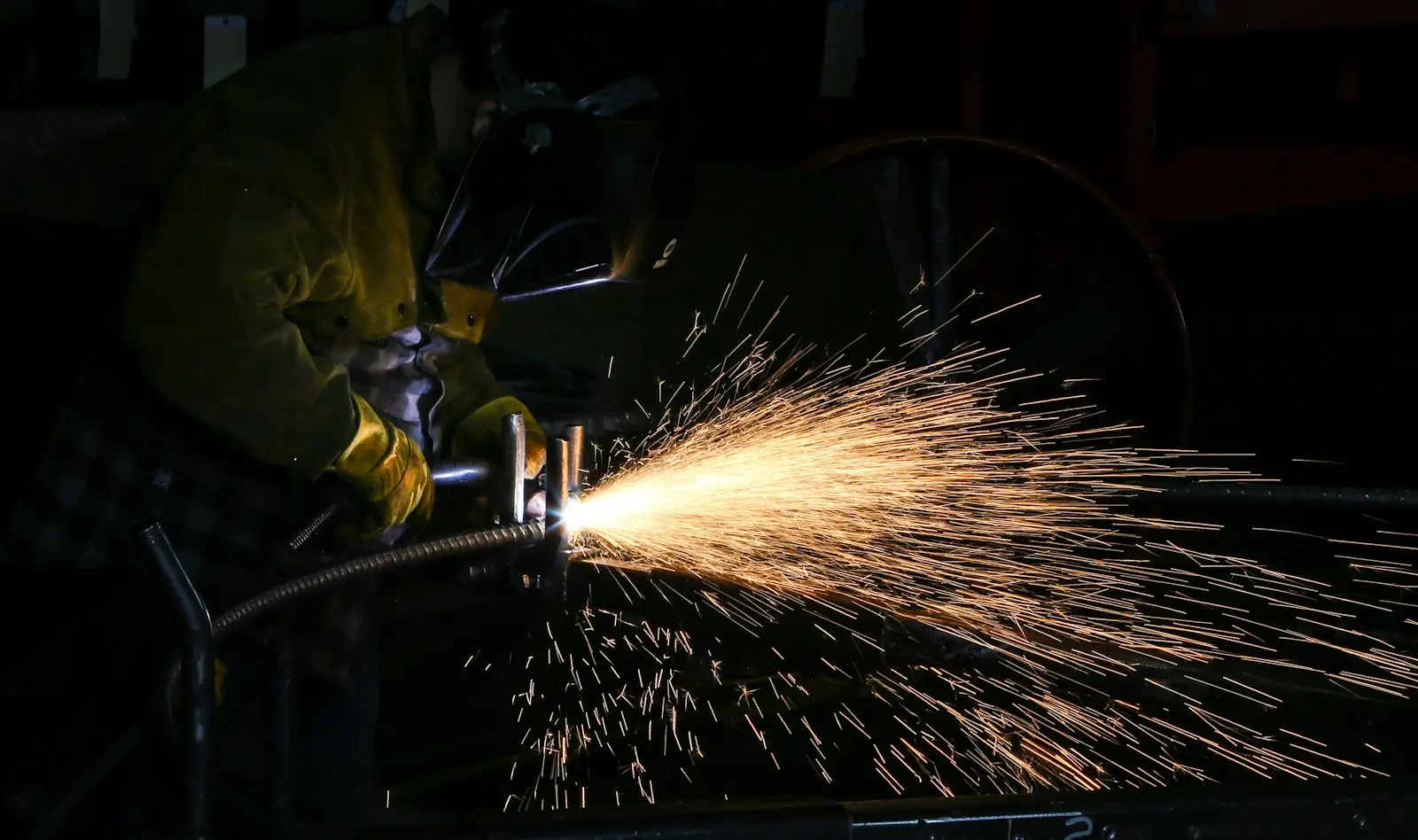

Typical TIG Welded Aerospace Parts
TIG is the go-to process for aerospace hardware made from thin, high-value alloys. It gives the welder fine control of heat on parts that cannot be scrapped and rebuilt cheaply.
Ducting and Exhaust Parts
Stainless and nickel alloy ducts, flanges, and exhaust sections that run hot.
Brackets, Mounts, and Clips
Structural and secondary parts welded from stainless, titanium, or aluminum.
Tube Assemblies and Manifolds
Fluid and air lines where weld penetration and inside cleanliness are checked.
Tooling and Ground Support Equipment
Fixtures, stands, and handling gear that support aircraft and engine work.
AWS D17.1 Aerospace Welding
AWS D17.1 is the main fusion welding spec for aerospace hardware. It covers how procedures and welders are qualified, and how finished welds are inspected and accepted. Your drawing sets the weld class.
For a buyer's view of the spec, read our AWS D17.1 aerospace welding standards guide.
Class A Welds
Used where a weld failure could cause loss of the aircraft or a serious safety risk. Class A has the tightest limits on porosity, undercut, and other flaws, and usually calls for the most inspection.
Class B Welds
Used where failure would reduce performance but not cause loss of the vehicle. Limits are looser than Class A.
Class C Welds
Used on parts where failure has little effect on safety or function. Visual inspection is usually enough.
Welder and Procedure Qualification
Welders are tested on coupons that match the material group and joint type. Records are kept current with a continuity log.
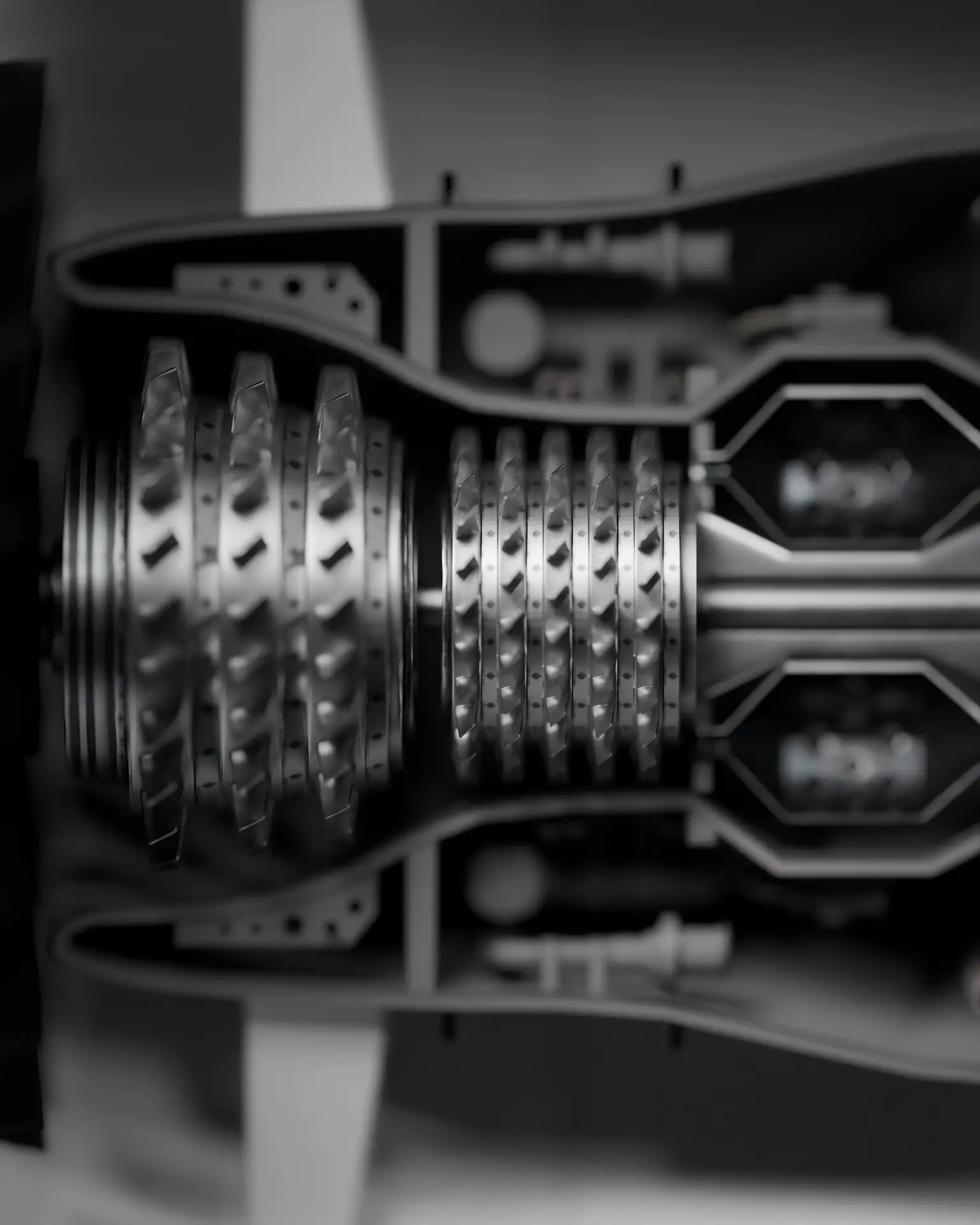 Engine and exhaust hardware uses heat-resistant nickel alloys and stainless that each have their own welding rules.
Aerospace Alloys and Filler Metals
Aerospace parts use alloys that are strong at heat and light for their weight. Each one has its own welding rules.
Inconel 625 and 718
Nickel alloys for hot sections and exhaust parts. Inconel 625 is usually welded with ERNiCrMo-3. Inconel 718 is welded with matching ERNiFeCr-2 and is often aged after welding.
Titanium 6Al-4V and CP Titanium
Titanium grabs oxygen and nitrogen above about 800 °F and turns brittle. We weld it with trailing shields or in a purge chamber. Weld color is checked: silver is good, blue or gray is a reject.
17-4 PH and 321 Stainless
17-4 PH is welded with matching filler and heat treated after welding to restore strength. 321 is welded with ER347 filler for ducting and exhaust parts.
Aluminum 6061
6061 is welded with ER4043 or ER5356, using AC TIG to clean the oxide. Welding drops strength near the joint unless the part is heat treated again.
Aerospace and ITAR Compliant Welds
Defense work brings rules on top of the weld spec. Export-controlled drawings and data must stay with U.S. persons. Metal sourcing may also be restricted.
See the aerospace and defense industry page for the full compliance picture.
- ITAR (22 CFR Parts 120 to 130): controls access to defense technical data
- DFARS specialty metals clause: may require melted-in-USA titanium, nickel, and some steels
 Aerospace buyers need traceable welds and records that hold up to audits.
Inspection and Traceability
Aerospace buyers need proof that each weld meets the class on the drawing. We build that proof into the job from the start.
Visual and Dimensional
Every weld gets a visual check at set magnification against the class limits, plus dimensional checks against the drawing.
Penetrant and Radiography
Fluorescent penetrant and radiographic testing are common for Class A and B welds.
Lot Traceability
Filler metal heat numbers, base metal MTRs, welder ID, and WPS number are tied to each part serial or lot.
Titanium and Nickel Alloy Welding Notes
Titanium and nickel alloys reward careful setup and punish shortcuts. The rules below are standard practice and usually appear in the procedure or on the drawing.
Titanium Shielding
Titanium must be shielded on the face, the back, and the cooling bead behind the torch. Silver to light straw color is generally acceptable. Blue, gray, or white oxide points to contamination.
Inconel 718 Heat Treatment
718 gains strength from aging. It is usually welded in the solution-treated condition and aged after welding, per the drawing.
Inconel 625 Filler
625 is a solid-solution alloy that does not need aging. It is commonly welded with ERNiCrMo-3 filler.
Cleanliness
Oil, marker ink, and shop dust can crack or embrittle these alloys. Parts and filler are cleaned with approved solvents before welding.
How to Specify Aerospace Welds
Aerospace drawings carry more requirements than most. These are the items we check first when we review a package for quote.
- Weld class per AWS D17.1, or the customer spec that replaces it
- Alloy, temper, and any heat treatment before or after welding
- Filler metal, if specified, and lot traceability requirements
- Nondestructive testing, such as penetrant per ASTM E1417 or radiography per ASTM E1742
- First article inspection to AS9102, if required on the PO
- Export control flags, such as ITAR, on the drawing or contract
- Required records: material certs, weld records, inspection reports, and certificate of conformance
What Drives the Cost of Aerospace Welding
Aerospace parts cost more to weld because the paperwork, inspection, and material are all controlled. These are the main cost drivers.
- Weld class, since Class A carries the tightest limits and the most inspection
- Alloy, with titanium and nickel alloys needing more shielding and cleaning
- Outside processes such as heat treatment and NDT
- First article inspection and the size of the data package
- Order quantity and repeat schedule
Frequently Asked Questions
What is AWS D17.1?
AWS D17.1 is the American Welding Society spec for fusion welding aerospace hardware. It sets rules for procedure and welder qualification, inspection, and weld acceptance. Weld classes A, B, and C set how strict the acceptance limits are.
How do I know which weld class my part needs?
The engineering drawing or purchase order should call out the class. If it does not, ask your design engineer before you order. We will not assume a class on flight hardware.
Is TIGTechs ITAR registered?
If your part is export controlled, tell us before you send files so we can route them correctly.
Can you weld titanium without it turning brittle?
Yes, if the hot metal is kept away from air until it cools. We use argon trailing shields, back purging, or a purge chamber. Weld color is the first check: bright silver or light straw is acceptable on most specs.
Do you send parts out for heat treat and NDT?
When we use outside processors, we manage them and include their certs in your data package.
What is an AS9102 first article inspection?
AS9102 is the aerospace standard for first article inspection. It records that the first part built matches every drawing requirement, including design characteristics, material, and special processes such as welding. Buyers often require it for new parts and after design or process changes.
Can a weld class be changed after the part is designed?
Only the design authority can change the weld class on a drawing. If a class looks stricter than the part needs, raise it with the engineer who owns the design, because a lower class can reduce inspection cost.
Why does weld color matter on titanium?
Color shows how much oxygen and nitrogen the hot metal picked up. Heavy color means the weld may be brittle. Most specs accept silver to light straw and reject darker colors.