Where Food-Grade Welds Are Used
Any surface that touches food, drink, or the water used to clean the line needs welds that clean as easily as the steel around them. These are the plant areas where we see the most sanitary weld work.
Dairy
Milk receiving, pasteurizer piping, cheese and yogurt equipment, and CIP loops, usually built to 3-A Sanitary Standards.
Brewing, Wine, and Spirits
Wort and beer lines, fermenter and brite tank fittings, and transfer manifolds that see hot caustic and acid cleaning.
Beverage and Bottling
Syrup rooms, blending skids, and filler supply lines where product sits in contact with welds every day.
Meat, Poultry, and Prepared Foods
Equipment frames, conveyors, and guarding that face daily high-pressure washdown and strong sanitizers.
Bakery, Snack, and Dry Foods
Hoppers, chutes, and conveying lines where smooth welds keep powder and crumbs from building up.
Compliance Frameworks for Food-Grade Welding
Food safety auditors and plant engineers look for these frameworks on welded equipment. See all of our credentials on the certifications and compliance page.
3-A Sanitary Standards
Design and fabrication rules for dairy and food equipment, including smooth, crevice-free welds and product contact finish of 32 µin Ra or better.
FDA and FSMA
FDA rules under 21 CFR Part 117 require equipment that can be cleaned and kept in good repair. FSMA puts the focus on preventing contamination, which starts with cleanable welds.
AWS D18.1 and D18.2
AWS D18.1 covers welding of stainless tube and pipe in sanitary systems. AWS D18.2 is the color chart used to judge inside-weld oxidation.
ASME BPE
The Bioprocessing Equipment standard sets weld and finish rules for pharma and high-purity lines. Some food and beverage plants adopt it too.
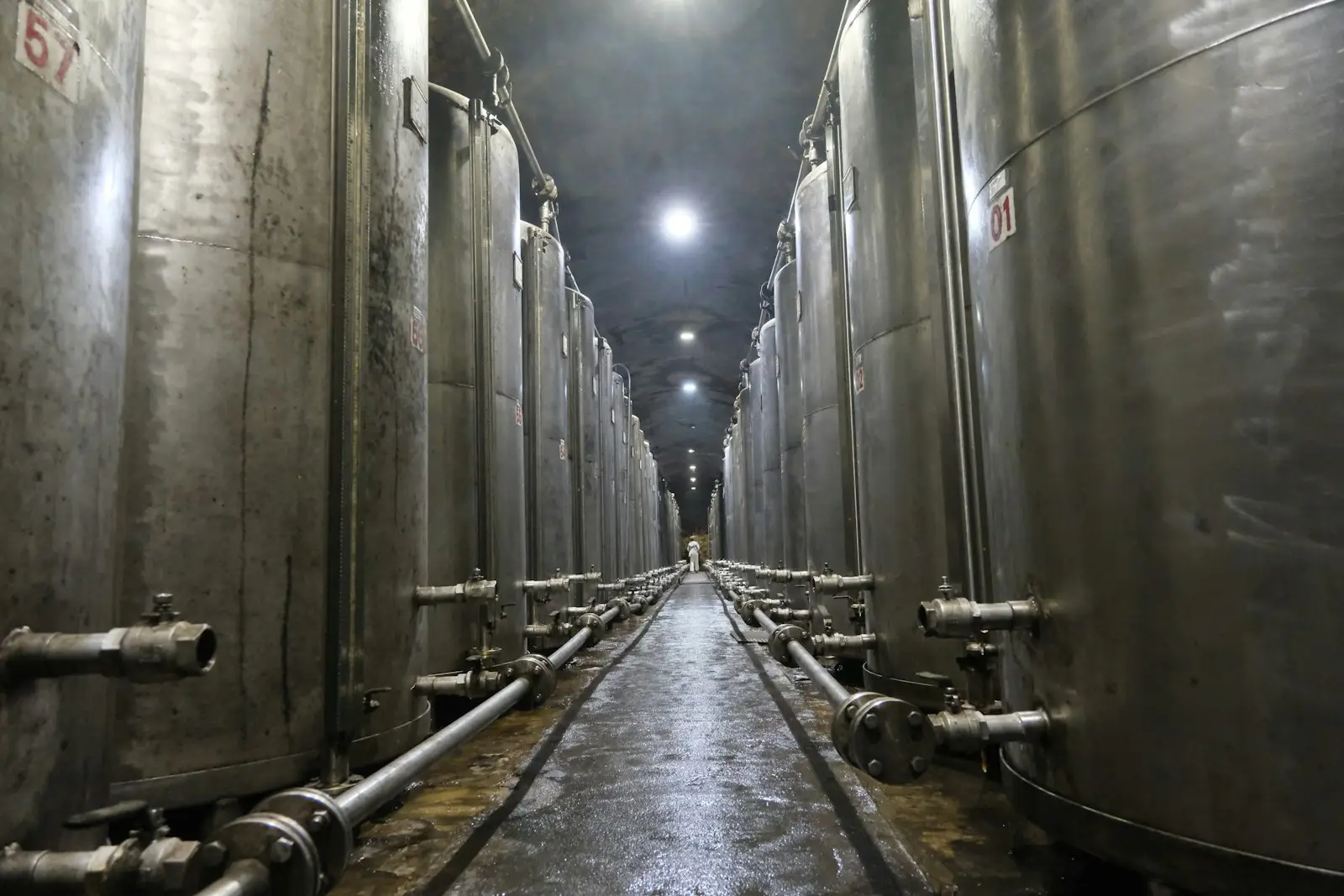 Process and fermentation tanks depend on smooth, crevice-free welds at every port, fitting, and transfer line.
Sanitary Food-Grade Fabrication
Our sanitary tube welding and custom stainless fabrication services cover the welded steel in a food plant.
- CIP and process tube spools, tees, and ferrules in 304L and 316L
- Dairy and brewery transfer lines
- Hoppers, chutes, and conveyor frames
- Equipment frames with sloped, cleanable surfaces
How We Keep Welds Cleanable
A weld that traps product can hide bacteria such as Listeria. These steps keep the weld smooth and drainable.
Full Argon Back-Purge
The tube is sealed and filled with argon, and oxygen is measured before welding. This stops the gray, rough oxide called sugaring. Read preventing sugaring in tube welding.
Flush, Full-Penetration Beads
Square-faced tube ends and tight fit-up give a smooth inner bead with no lip or pocket.
Polish and Passivate
Welds are blended to the specified Ra and passivated per ASTM A967 or A380. Read more in FDA and 3-A sanitary welding standards.
Right Grade for the Product
304L for most dairy and beverage. 316L for brines, acids, and chlorinated cleaners. Compare in ER308L vs. ER316L.
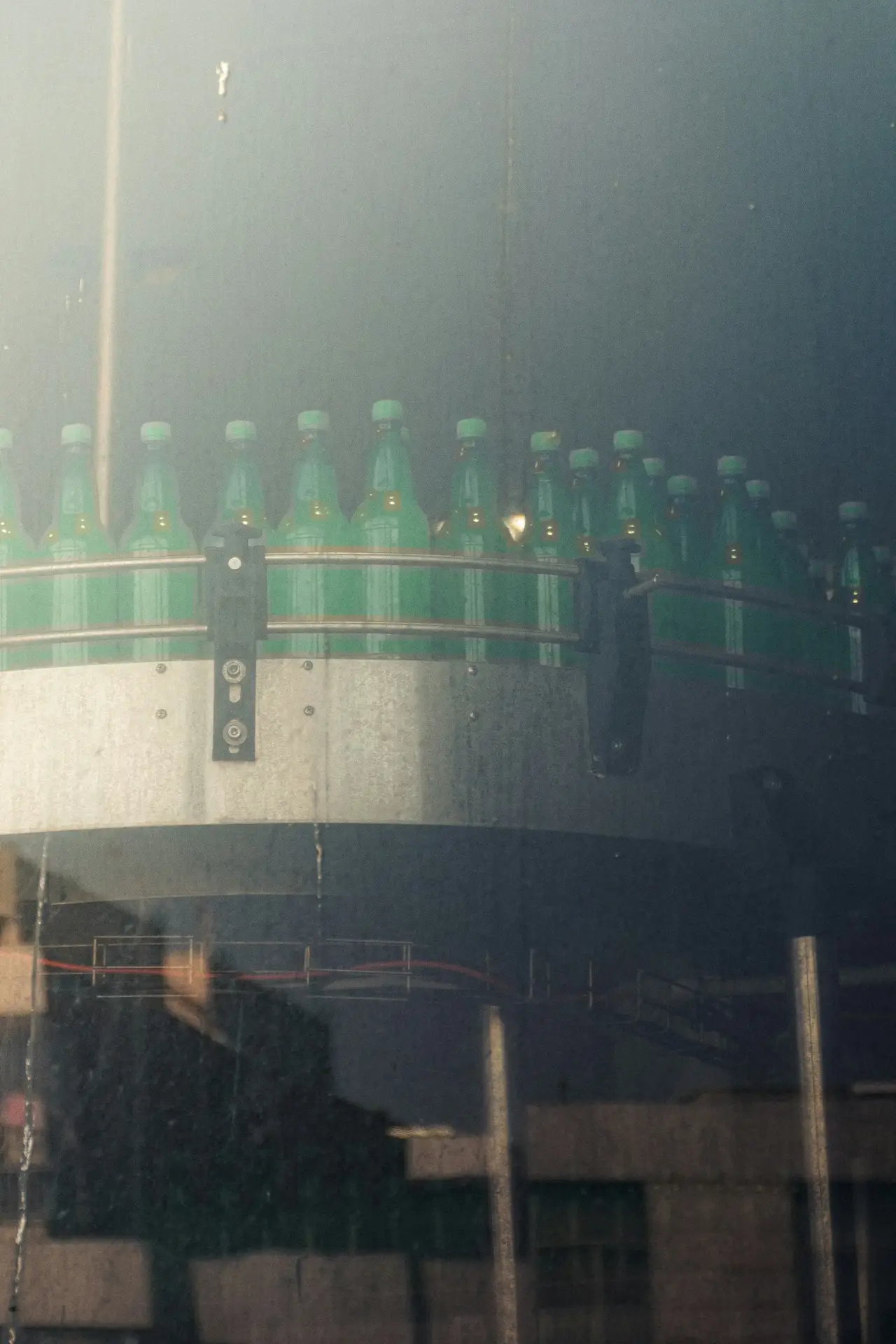 Filler supply lines carry product right up to the container, so every inside weld is a product contact surface.
Planning Weld Work Around Plant Downtime
Every hour a line is down costs production. Good planning moves most of the welding out of the shutdown window.
Measure Before You Build
Field-verify tie-in points and existing line routes before fabrication starts, so spools fit the first time.
Prefabricate Spools in the Shop
Tube spools, manifolds, and frames are welded, inspected, and documented in the shop, where purge and finish are easier to control.
Keep Spools Clean in Transit
Finished spools are capped and bagged so they arrive ready to install without another cleaning step.
Leave Only the Tie-Ins
During the outage, only the final connection welds remain. Ask early whether your project needs on-site tie-in welding.
Signs a Food Plant Weld Needs Repair or Replacement
Bad welds rarely fail all at once. Watch for these signs during sanitation checks and audits, and fix them before they become a contamination finding.
Rust Streaks and Heat Tint
Brown staining at or beside a weld means the protective chrome oxide layer is damaged. Heat tint that was never cleaned or passivated is a common cause.
Pitting Near Welds
Small pits often show up where chloride cleaners or salty product sit on 304 stainless. Moving to 316L can help. Compare in ER308L vs. ER316L.
Cracks at Legs and Brackets
Vibration from pumps and agitators can crack welds at supports and brackets over time.
Rough or Sugared Inside Welds
A borescope may show gray, crusty oxide inside the tube. It traps product and cannot be cleaned. Read preventing sugaring in tube welding.
Questions to Ask a Sanitary Welding Supplier
Not every stainless shop is set up for food-grade work. These questions separate shops that do sanitary welding every day from shops that do it once in a while.
- Do you back-purge every tube weld, and do you measure oxygen before welding?
- Can you borescope welds and give us the images with the weld log?
- Are your procedures qualified to AWS D18.1 or ASME BPE?
- Can you trace tube, fittings, and filler by heat number?
- Will you weld sample coupons to our acceptance level before production?
- Do you passivate in-house or through a vendor, and which standard do you follow?
Serving Chicago and Midwest Food Processors
Chicago and the wider Midwest hold one of the largest clusters of food, dairy, and beverage plants in the country. We serve processors in Chicago and across Illinois from our Dallas headquarters.
Frequently Asked Questions
What surface finish do food contact welds need?
3-A guidance calls for product contact surfaces at least as smooth as 32 µin Ra. Some plants or products need smoother. The weld must be blended so it is no rougher than the tube around it.
Is 304L stainless good enough for a food plant?
For most dairy, beverage, and dry food lines, yes. Use 316L where salt, acidic products, or chlorine-based cleaners contact the steel. The extra molybdenum in 316L resists pitting.
What does 3-A authorized mean?
A 3-A Symbol on equipment means a third-party evaluator checked that the design meets the matching 3-A Sanitary Standard. Not every welded part needs the symbol. Ask your plant engineer which items require it.
Can you document sanitary welds for a food safety audit?
Yes. Records can include weld logs, borescope images, purge readings, MTRs, and passivation certs.
How do I know if a weld will trap bacteria?
Look inside with a borescope. Red flags are sugaring, pits, cracks, lack of penetration, and a raised lip or concave dip. Any of these can hold product after CIP.
What is AWS D18.2?
AWS D18.2 is a guide with photos of numbered discoloration levels on the inside of welded stainless tube. Plants use it to set how much heat tint is acceptable, and inspectors compare borescope images against it.
Can welding be done during a plant shutdown?
Yes. Most of the work can be built ahead as shop spools, leaving only the final tie-in welds for the shutdown window. Plan field measurements early so the spools fit the first time.
Does food-grade tube need to be electropolished?
Not always. Mechanically polished tube to 32 µin Ra or smoother meets most food and beverage needs. Electropolishing is used where a smoother, more cleanable surface is worth the cost, and is common in pharmaceutical lines.