Stainless Frames, Enclosures, Tanks, and Skids
Most of our fabrication work is equipment that has to stay clean and stay put for years. Typical builds are listed below. If your part is not on the list, send the drawing anyway.
- Machine frames and bases for food, pharma, and packaging equipment
- Hoppers, chutes, and open-top tanks
- Process skids with welded tube and pipe spools
- Guards, brackets, and weldments for cleanrooms and labs
Stainless Grades and Filler Metals
We match grade and filler to where the part will live. Ask us if you are not sure. Over-specifying costs money, and under-specifying costs more later.
304L with ER308L
The default for indoor equipment, dry food, and general use. Low carbon helps prevent carbide precipitation at the weld.
316L with ER316L
Adds molybdenum for chloride and washdown service. Pick it for salt, brine, bleach-based cleaners, or coastal sites. See ER308L vs. ER316L.
Duplex 2205 with ER2209
Higher strength and better stress corrosion cracking resistance than 316L. Used for some tanks and offshore parts.
Mixed Stainless and Carbon Steel
When a stainless part bolts or welds to a carbon steel base, we use ER309L at the joint. Read welding 304 stainless to carbon steel.
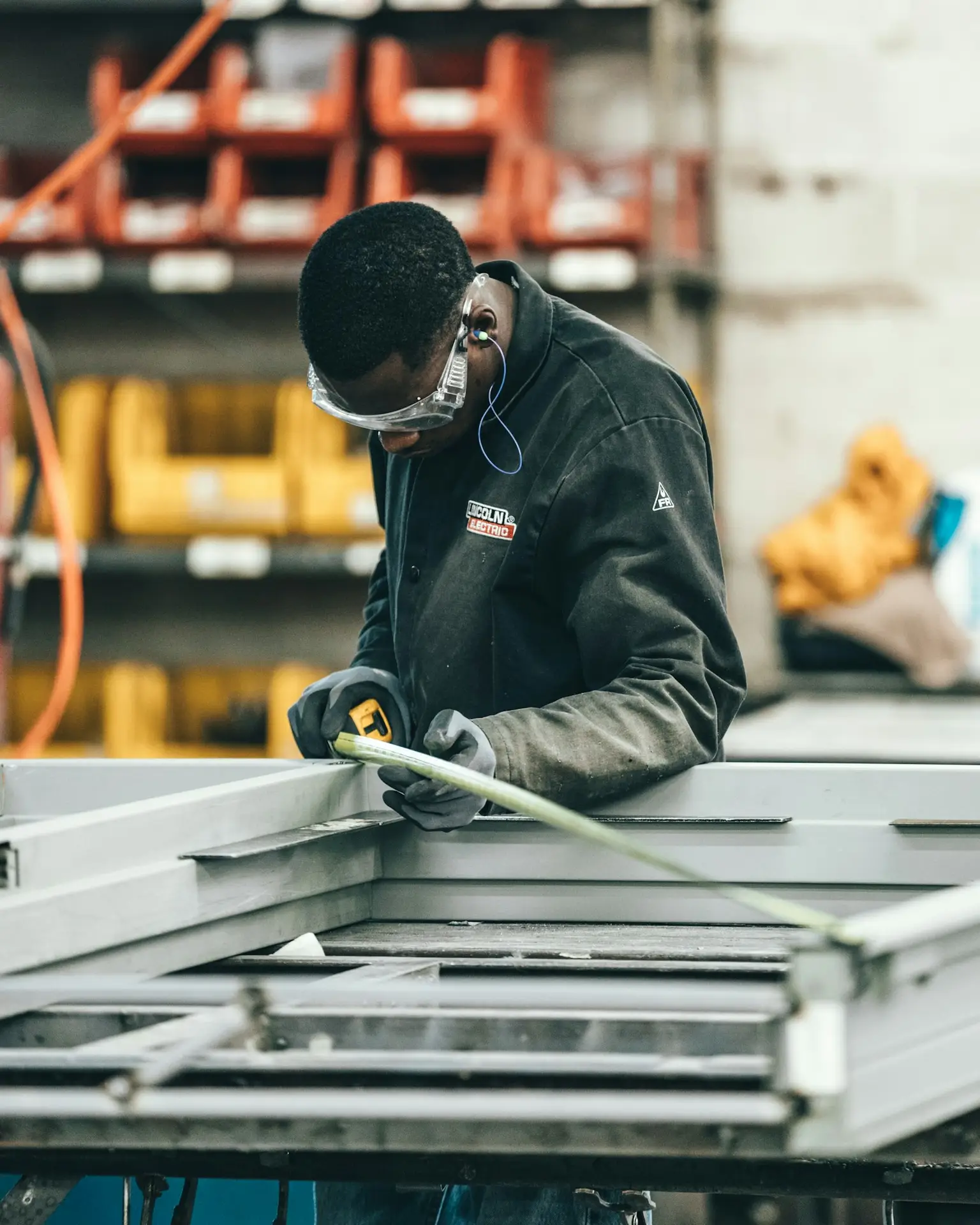 Frames and weldments are checked for size and square before and after welding.
Cutting, Forming, and Fit-Up
Good welds start with good parts. Clean edges and tight fit-up mean less filler, less heat, and less warpage.
We keep stainless away from carbon steel tools and dust. Carbon steel particles stuck in stainless will rust and stain the part.
Weld Sequence Planning
We plan tack and weld order to balance heat and hold flatness. Long seams use skip or stitch welding. See preventing warpage in thin-gauge stainless.
Finishing and Passivation
The finish callout on your drawing drives both cost and cleanability. We blend welds to match the surrounding surface.
Mill and Polished Finishes
Common callouts are 2B mill finish and #4 brushed finish. Sanitary parts may call out a max Ra, such as 32 µin Ra for product contact under 3-A guidance.
Weld Blending
Weld beads can be ground flush and grained to match a #4 finish.
Passivation
Passivation per ASTM A967 or A380 removes free iron and restores corrosion resistance after fabrication.
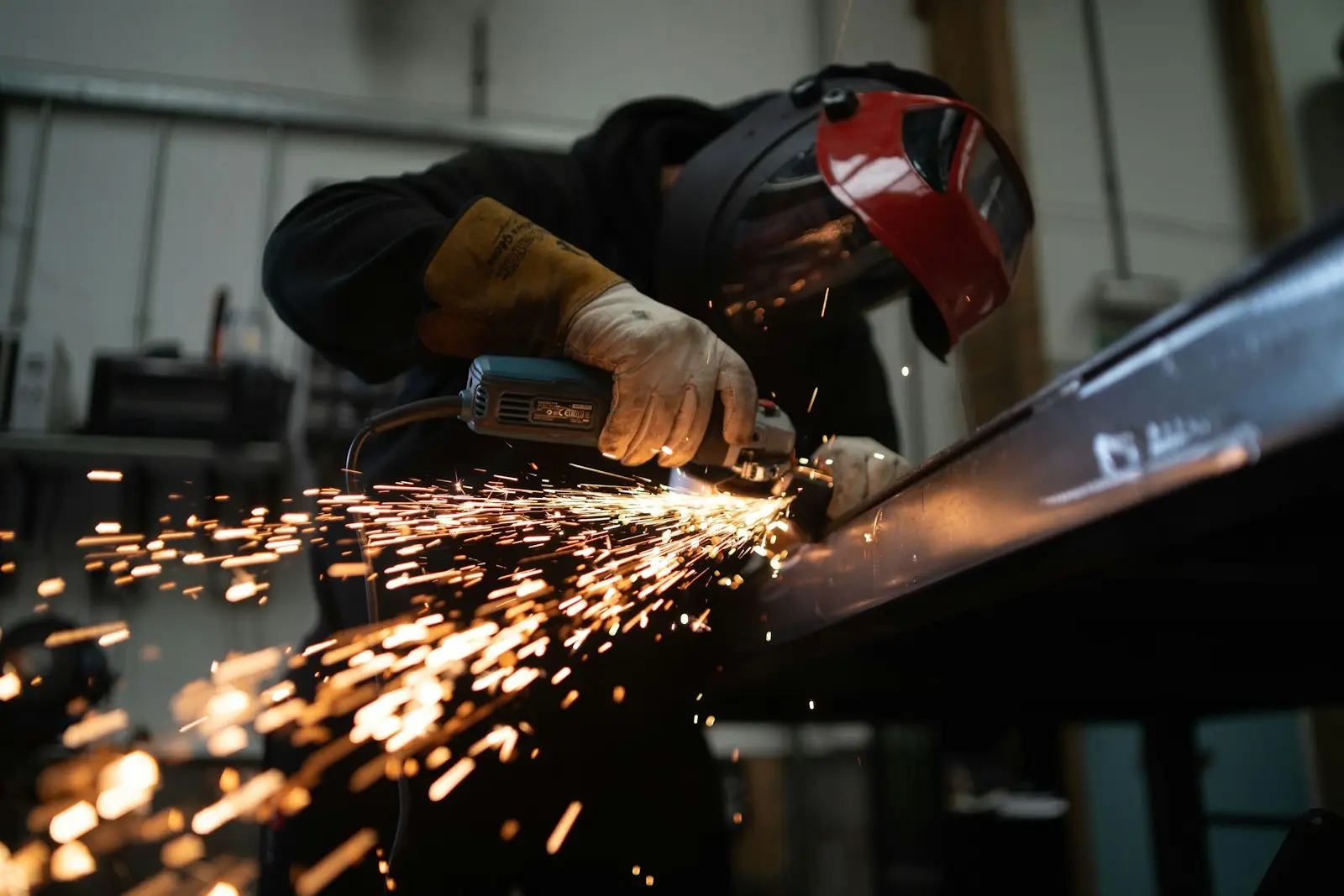 Weld blending and finishing turn a welded assembly into a finished part.
Design Tips That Lower Fabrication Cost
Small design choices change the price of a stainless part more than most buyers expect. These tips come up again and again when we review drawings for quote.
- Use standard sheet gauges and bend radii, so stock material and tooling fit the part
- Replace welded corners with bends where you can, since a bend is faster than a weld
- Place welds where a welder can reach them without special access
- Hold tight tolerances only on the features that need them, and machine after welding if a feature is critical
- Call out a polished finish only on the surfaces people see or product touches
- Show datums on the drawing, so the part is built and measured from the same points
Distortion Control on Large Stainless Assemblies
Stainless expands more than carbon steel and holds heat near the weld, so large frames and panels move as they are welded. Controlling that movement is planned before the first tack.
Balanced Weld Sequence
Welding opposite sides in turn keeps shrinkage even, so the part does not pull to one side.
Stitch and Skip Welding
Short, spaced welds on long seams limit heat buildup in any one area.
Fixtures and Tacks
Rigid fixtures and evenly spaced tacks hold size while the welds cool.
Straightening and Final Checks
Assemblies are checked for flatness and square after welding, and corrected before finishing when needed.
How to Specify a Custom Stainless Fabrication
The more complete the package, the faster and more accurate the quote. These are the items we look for.
- 2D drawings with tolerances, plus 3D models if you have them
- Grade and gauge, such as 304L 14 gauge or 316L 3/16 in plate
- Weld symbols and the governing code, such as AWS D1.6 for structural stainless
- Finish callouts such as 2B, #4 brushed, or bead blast, and where each applies
- Passivation or cleaning requirements after fabrication
- Quantity, release schedule, and packaging needs
- Inspection and documentation requirements
From Prototype to Production
Many fabrications start as a single prototype and turn into a repeat part. Planning for that path early saves time later.
The first build proves the design and the weld sequence. Changes are marked up and fed back into the drawing. Once the design is stable, fixtures and set procedures make each repeat order faster and more consistent, and the setup cost spreads across more parts.
Frequently Asked Questions
What do I need to send for a custom fabrication quote?
Send a dimensioned drawing, material grade, finish callout, and quantity. A 3D model such as a STEP file helps us check bends and fit-up.
Why does stainless sometimes rust after fabrication?
Usually it is free iron from carbon steel tools, or heat tint left on the welds. Both break the thin chromium oxide layer that protects stainless. Dedicated tools, tint removal, and passivation fix it.
Is 316L always better than 304L?
No. 316L resists chlorides better, but it costs more. For dry, indoor, or mild washdown service, 304L does the job. We will tell you if your spec looks over- or under-built.
Can you build prototypes and then move to production?
Yes. We build first articles, then lock in fixtures and weld procedures for repeat runs.
What is the difference between a #4 and a 2B finish?
2B is the smooth, slightly reflective mill finish on most sheet. #4 is a brushed finish with a visible grain. #4 hides scratches and is common on food equipment.
Can you quote from a sketch instead of a full drawing?
A dimensioned drawing gives the most accurate quote. If you only have a sketch, send it with the key dimensions, material, and quantity, and we will tell you what else we need to price it.
How do I keep a stainless part from rusting after fabrication?
Keep carbon steel tools and grinding dust away from the part, remove heat tint, and passivate after fabrication. Choosing 316L for chloride or washdown service also helps.
What finish options are common on stainless fabrications?
Common finishes are 2B mill, #4 brushed, bead blast, and electropolish. The right one depends on looks, cleanability, and cost. Sanitary parts are often specified by a maximum Ra value instead of a finish name.